
Westward Bound Heritage – Four Decades of British Latex Fashion & Creative History
Westward Bound's creative origins can be traced to London's underground cultural scene of the early 1980s. From those beginnings, through Der Putsch, Cornwall, mail order, printed catalogues, retail and the early internet, the company evolved into an independent British fashion design house and manufacturer specialising in natural rubber latex clothing.
This heritage page brings together original archive material, photography, catalogues, press coverage, commissioned work, international creative collaborations and museum projects documenting more than four decades of Westward Bound's development. Today, our garments are conceived, pattern-cut, handcrafted and finished by our specialist team in Plymouth, Devon.
Commissioned Wardrobe - Royal Albert Hall, London, 2014
Paul Mitchell International – Art-House Ballet in Memory of Vidal Sassoon and Paul Mitchell
Paul Mitchell International commissioned Westward Bound to conceive, design and construct the complete wardrobe for an Art-House Ballet created in memory of Vidal Sassoon and Paul Mitchell. The production toured internationally and was performed at London's Royal Albert Hall in 2014.
Client: Paul Mitchell International, Century City, Los Angeles, California, USA
Wardrobe Design & Construction: Westward Bound, Plymouth, Devon, UK
Venue: Royal Albert Hall, London, UK
Year: 2014
The commission followed approximately seven years of collaboration between Westward Bound and Paul Mitchell International, during which we provided garments for the company's international hair shows.
The ballet wardrobe drew inspiration from our Bordelle-L'Amour Collection. Each design was specially developed to meet the physical demands of live dance while retaining the colour, form and visual character of the original concepts.
When the brief arrived from Paul Mitchell International in Los Angeles, Westward Bound Creative Director Sarah Beech began working directly with the material and produced the first prototypes within hours. These initial ideas were subsequently developed and refined in our Plymouth studio for the finished production.
As we recall:
“Sarah likes to work ideas straight to the fabric. She disappeared into our studio and came out several hours later with ready-made prototypes. These were developed to allow for fluidity of movement and to create a moving feast of colour and design. We were all incredibly proud of the finished result.”
The completed wardrobe was shipped from Plymouth to Los Angeles before becoming part of the internationally touring production. The accompanying film was recorded live during the Royal Albert Hall performance in London before an audience of more than 5,000 people.
The project forms an important part of Westward Bound's history of commissioned creative work, bringing together specialist garment construction, performance design and an established international collaboration.
Seeds – Westward Bound's Origins in London Subculture, 1976–1984
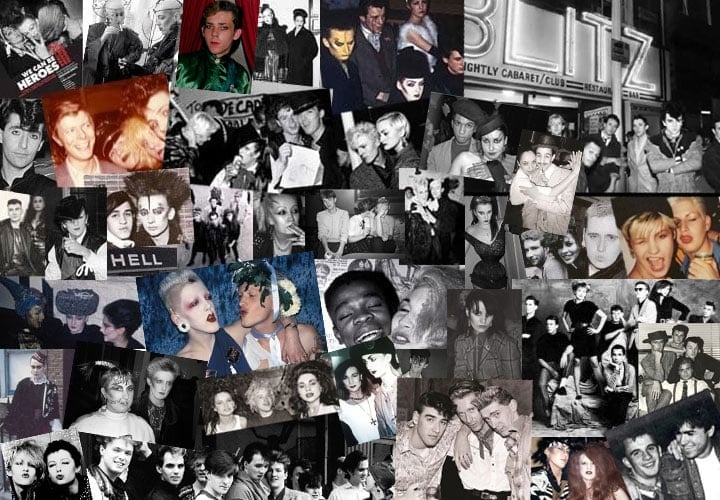
Westward Bound's creative journey grew out of London's underground cultural scene of the late 1970s and early 1980s. The punk explosion, Soho nightlife and emerging New Romantic club culture all helped shape the environment in which our earliest ideas developed.
We were once affectionately described as being on “the dark side of the New Romantics” - a description we regarded as a fabulous compliment and one that captured something of the energy, irreverence and creative edge of the period.
The accompanying photographic montage is both a snapshot and an homage to the remarkable people whose style, individuality and company contributed to that creative atmosphere.
Graham Smith and Chris Sullivan's We Can Be Heroes: Punks, Poseurs, Peacocks and People of a Particular Persuasion – London Clubland 1976–84 documents the people, places and distinctive club culture of the period. Westward Bound founder Steve Beech appears within the book as part of its wider record of London nightlife. In 2026, the work was republished as Blitz and Beyond: The New Romantic Revolution, bringing this photographic and cultural record to a new audience.
We were delighted that the original book was included in the Victoria and Albert Museum's David Bowie Is retrospective and, more recently, in The Design Museum's Blitz: The Club That Shaped the 80s exhibition. These appearances reflect the wider cultural significance of the period and the people documented within the book.
Image credits: Graham Smith ©, Derek Ridgers ©, Sheila Rock ©, Ash Tyrrell ©, Martin Vintner-Jackson ©, Paul Sturridge ©, Peter Ashworth © and David Johnson ©.
John Sutcliffe, AtomAge and the Embryonic Years, 1982-1993
Against the creative energy of early-1980s London, the journey moved naturally towards deeper areas of underground and alternative culture.
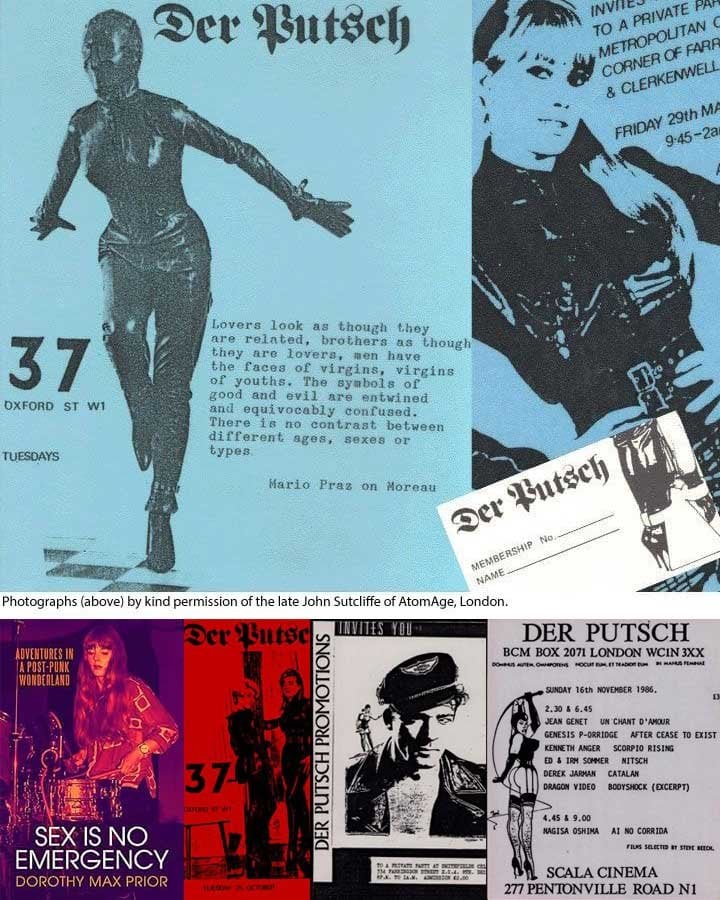
In 1983, Steve Beech established Der Putsch, a London-based leather and latex club that became an important part of the capital's underground nightlife.
Dorothy Max Prior later described Der Putsch in Sex is No Emergency: Adventures in a Post Punk Wonderland as a club that, by 1984, had become a destination for people serious about rubber and leather, with strong links to AtomAge and an emphasis on distinctive graphic design and limited-edition merchandise.
City Limits magazine wrote in 1985 that Der Putsch, despite its secrecy, was increasingly acknowledged as a place to go, noting events held in locations ranging from dimly lit clubs to riverboats and even New York's Danceteria.
In 2019, Reprobate Press described Der Putsch as “the best club in the world and the most exciting place to go in London in the late 1980s.”
Meeting John Sutcliffe
The imagery used on early Der Putsch flyers and membership material was supplied courtesy of the late John Sutcliffe of AtomAge.
Steve Beech first met Sutcliffe by chance in Dryden Street, Covent Garden, in 1982, when Steve was 21. The two became friends, and Steve would regularly visit the AtomAge workshop for coffee and conversation with Sutcliffe and his assistant Debbie Pickford.
John Sutcliffe had been involved in leather wear since the 1950s and rubber couture from the 1960s. His work attracted the attention of figures including Marianne Faithfull, Allen Jones and Stanley Kubrick and became an important part of Britain's fashion and design history.
Sutcliffe died in 1987 and remains, in our view, an under-recognised British designer and specialist garment maker.
Steve Beech recalls:
“John Sutcliffe was a polite, gentle and well-spoken gentleman. He was an interesting character, enormously charming. John influenced the early ideas, concepts and etiquette behind Der Putsch and Westward Bound.”
The text used on our first flyer was taken from art and literature critic Mario Praz's appraisal of Gustave Moreau. Praz had died in 1982, and his writing formed part of the cultural atmosphere surrounding us at the time.
We were a tad pretentious, but well-meaning.
The Der Putsch and Westward Bound Archive
The principal Der Putsch and Westward Bound archive is held by Westward Bound.
Additional archive material can also be found within:
- The Mott Collection / Cultural Traffic, London
- The Bishopsgate Institute, London
- Liverpool John Moores University
From Der Putsch to Westward Bound, 1987–1993
The visual style of the original Der Putsch flyers was immediate, informal and created primarily for the events themselves. To our surprise, many later became collectable artefacts of London's underground club culture.
Der Putsch became part of what, in retrospect, can be understood as an “outsiders as insiders” moment in 1980s London: a period in which underground music, fashion, art and nightlife increasingly influenced wider culture.
The name Der Putsch deliberately referenced the cultural tension and subversive artistic spirit associated with Weimar-era Berlin.
As the club developed, it became part of a wider fetish-party scene that would later include events such as Club Submission and Torture Garden, each creating its own distinct interpretation.
Rubber Ron, DJ at Der Putsch from 1984–1988 and later creator of Club Submission, recalled:
“The game changer! I am proud to have been part of London's finest inspirational fetish experience.”
Marquis Magazine wrote in 2008:
“The Der Putsch parties were legendary, setting the style for the London fetish scene that followed.”
The Westward Bound Name
In 1987, the Westward Bound name was established in Launceston, Cornwall, for a highly unconventional Bed, Breakfast and Dungeon venture inspired by our London nightlife experience.
The name remained.
The project attracted considerable media attention. In 1991, Westward Bound appeared in Scarfe on Sex, a BBC documentary presented by cartoonist and illustrator Gerald Scarfe and watched by more than nine million viewers. Further coverage followed in television, radio, newspapers and magazines, including i-D, Radio Times and international press.
By 1992, Time Out magazine described Westward Bound as “the most exclusive fetish organisation in the UK.”
By the time Der Putsch ended in 1993, Westward Bound had already begun its transformation from an underground cultural venture into a specialist design and clothing business.
Photographs: Early Der Putsch clothing designs, 1984–1985, including limited-edition T-shirts produced in runs of 100 and signed by participating artists. Contributors included Genesis P-Orridge of Throbbing Gristle and Psychic TV. Designs were also worn by Martin Gore of Depeche Mode.
References:
Jonny Trunk – Dressing for Pleasure: The Best of AtomAge 1972–1980, published 2010.
Peter Gay – Weimar Culture: The Outsider as Insider, published 1968.
Mario Praz – The Romantic Agony, published 1933.
The Evolution of Westward Bound Latex Fashion – Catalogues, 1992–2001
Westward Bound's surviving printed catalogues provide a visual record of the company's gradual transition from its underground cultural origins towards specialist fashion design and latex clothing.
Together, these surviving catalogues provide primary archival evidence of the evolving design language that shaped Westward Bound today.
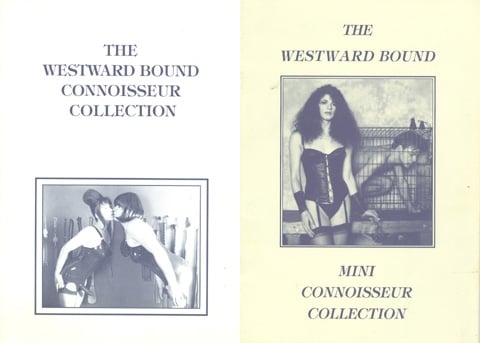
The Connoisseur Collection, 1992 & Mini Connoisseur Collection, 1993
The Connoisseur Collection appeared in 1992, followed by The Mini Connoisseur Collection in 1993. Their imagery still reflected something of the theatricality and unconventional spirit of the company's earlier years.
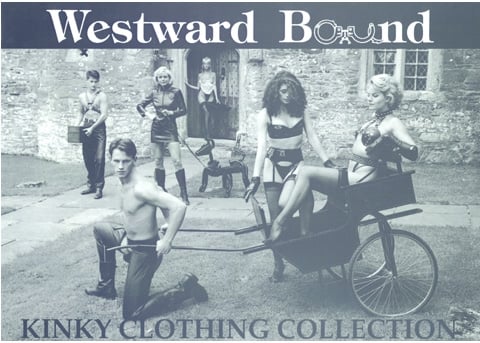
The Kinky Clothing Collection, 1994
The Kinky Clothing Collection was photographed over the course of a week at a country house in Devon.
The shoot felt more like a house party than a formal fashion production and became an enjoyable experiment in developing the visual identity, styling and presentation of Westward Bound clothing.
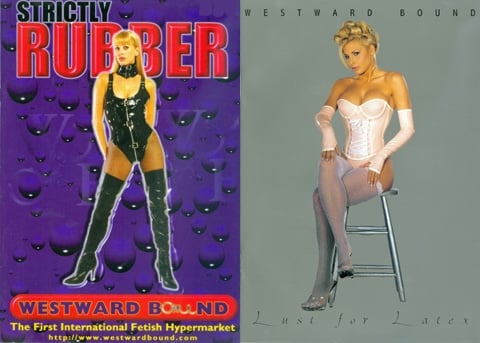
Strictly Rubber, 1998 & Lust for Latex, 2001
By the late 1990s, the company's transition towards specialist rubber and latex clothing was increasingly evident.
Strictly Rubber, published in 1998, documented the growing focus on latex design. Lust for Latex, published in 2001, reflected a further move towards a softer, more fashion-led presentation.
Mail Order, Retail and the Internet – Westward Bound, 1992–2013
Following the extensive media attention generated by the original Westward Bound venture in Cornwall, we established a specialist mail-order business under the Westward Bound name in 1992.
A year later, Der Putsch and its smaller sister event, Madame Venus, were brought to an end so that attention could concentrate increasingly on Westward Bound.
By the mid-1990s, clothing and design had become central to the business.
Sarah O'Reilly joined Westward Bound as a designer in May 1995. Her influence broadened the creative direction and encouraged a move toward a wider fashion audience.
In November 1995, Westward Bound opened a retail shop in The Barbican, Plymouth, providing the company with a permanent public presence.
The creative trajectory was moving increasingly towards specialist latex fashion.
Westward Bound in Plymouth
The Der Putsch club-night concept was later revived under the Westward Bound name in Plymouth. The events attracted guests from across Europe and became closely associated with the retail store.
Contemporary flyers survive within the Westward Bound archive, including a 2008 twenty-fifth-anniversary design created as an homage to artist Jamie Reid.
Early Online Development
Westward Bound launched its first website in 1997, establishing an early online presence that would ultimately develop into the company's principal direct sales channel.
The original dungeon facility closed by 2001, allowing the business to concentrate increasingly on designing and manufacturing latex clothing.
In January 2013, after 18 years, we closed the Plymouth retail store as consumer purchasing continued its structural shift from the high street to the internet.
At the same time, we ended the Westward Bound parties after 29 years of club and event activity.
The closure of the shop and parties marked the end of one phase of Westward Bound and the beginning of another: an independent British design and manufacturing business increasingly focused on creating latex clothing for customers worldwide.
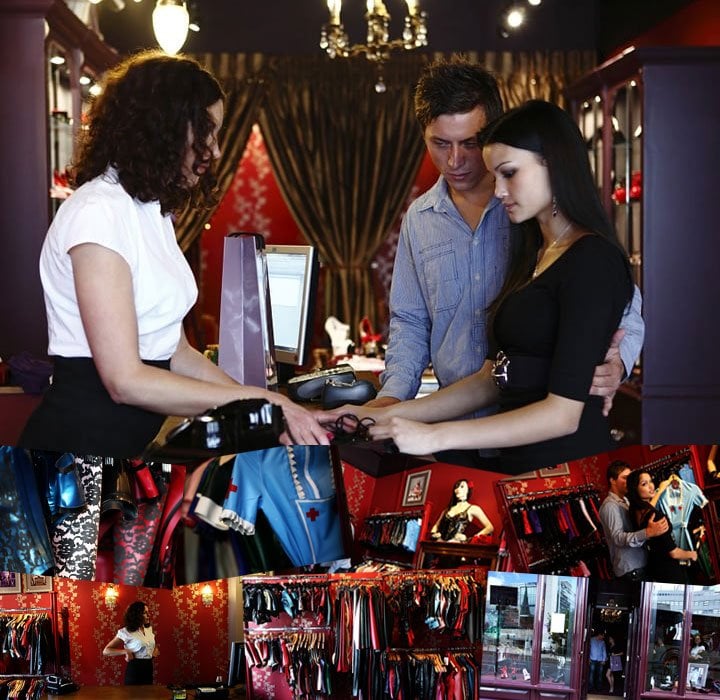
Main photograph: Westward Bound retail store, Plymouth, Devon, UK, 2011. Photography by Alex Christaki.
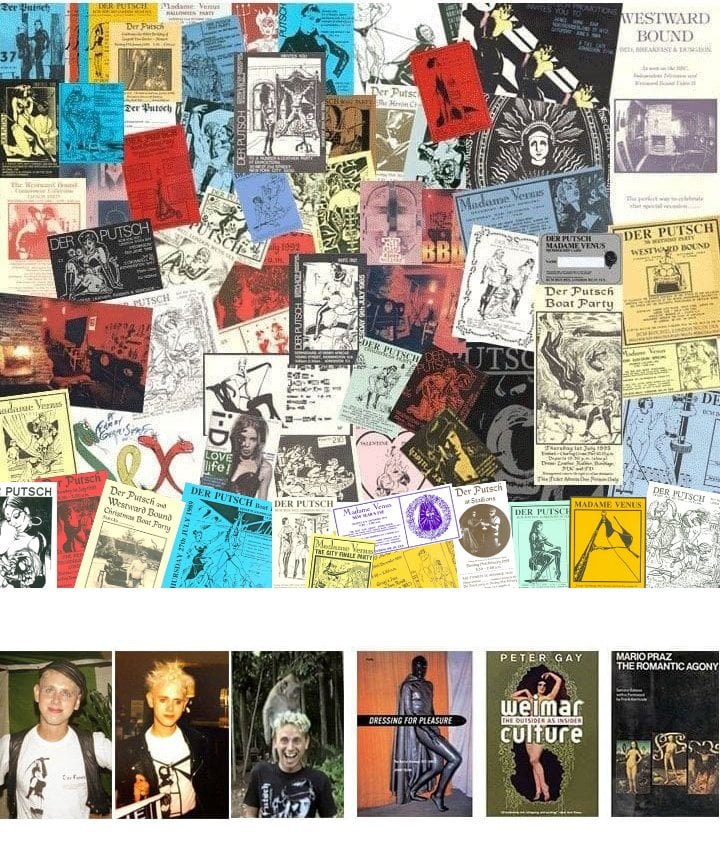
From London to Plymouth – Westward Bound Party Culture, 1995–2012
The accompanying selection of original party flyers documents the continuation of Westward Bound's club culture after the move from London to Plymouth.
Produced between 1995 and 2012, the flyers form part of the Westward Bound archive and provide a visual record of the period's changing graphic styles, events, and creative character.
Although the parties ended in 2013, their energy and visual culture remain part of the wider history from which Westward Bound's design identity developed.

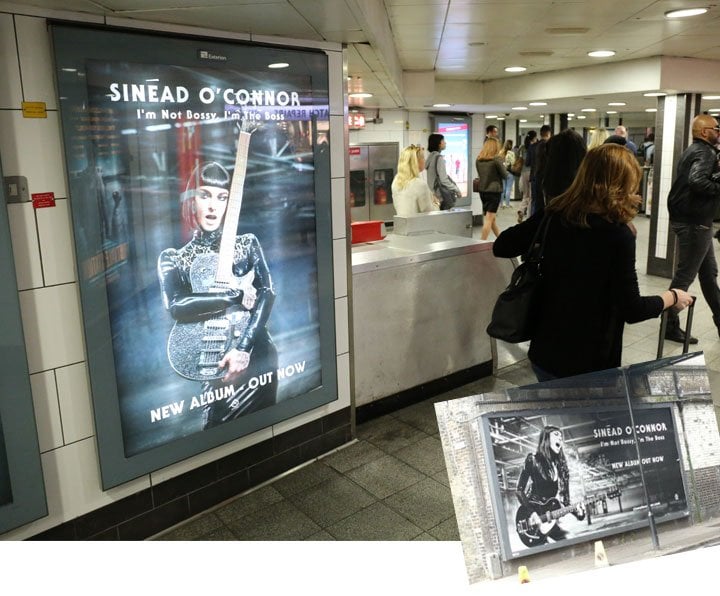
Sinéad O'Connor – I'm Not Bossy, I'm the Boss, 2014
Sinéad O'Connor wore Westward Bound's Bordelle-L'Amour Latex Rose Dress on the cover of her 2014 album I'm Not Bossy, I'm the Boss.
The choice came as a complete surprise to us.
Our Creative Director, Sarah Beech, née O'Reilly, is from Cork, Ireland, so seeing one of her designs worn by Sinéad created an immediate sense of pride. We had long admired Sinéad both as an artist and as a person.
Sinéad had purchased five Westward Bound dresses specifically for the album shoot with photographer Donal Moloney in Dublin. We were unaware which photographs had been selected until the album was released.
Speaking to The Observer on 27 July 2014, Sinéad explained that the visual presentation was intended to demonstrate that a woman could still be sexy while wearing substantial clothing.
The album formed part of a wider discussion about the representation and objectification of women within the music industry. Its title drew on the distinction between the words “bossy” and “boss” and the different ways they are often applied to women and men.
For us, the appearance of a Westward Bound design on the album became an unexpected and memorable part of the company's cultural history.
Inset image: Sinéad O'Connor also wore our Trixi Latex Dress for the single Take Me to Church from the same album.
International Recognition of Westward Bound
Westward Bound's international reputation developed alongside the growing reach of its direct-sales business and creative collaborations.
In 2015, Von Gutenberg Magazine, California, USA, observed:
“It is a testament to the drive and vision of Westward Bound that, more than 30 years since London clubs swung to the snap of cat o'nines and pulse-pumping electro beats, the company rides high as one of the leading design labels, with the majority of sales flying beyond their base in Europe.”
The quote reflects Westward Bound's shift from London underground roots to a design business serving an international audience.
Westward Bound Around the World – International Creative Collaborations
Westward Bound designs have been photographed, exhibited and creatively interpreted internationally, bringing together our British-designed latex fashion with photographers, artists and models in locations around the world.
These collaborations form part of our continuing creative heritage. From fashion photography and location shoots to exhibitions and artistic projects, they reflect a long-standing enthusiasm for visual experimentation and for seeing Westward Bound designs interpreted through the creative vision of others.
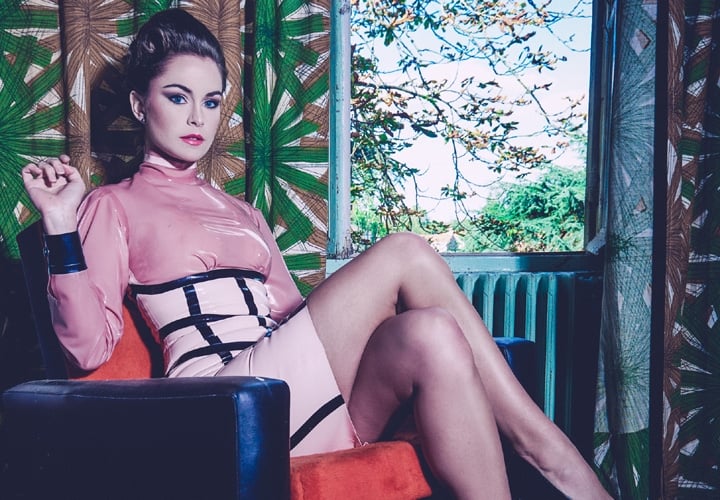
Latex à la Mode – Nantes, France, 2015
Amy Model wears our Brunelleschi Latex Dress in this 2015 portrait by French photographer Olivier Lannes of OL4N Photography, photographed in Nantes, France.
The collaboration places a Westward Bound design within a distinctly fashion-led photographic setting and forms part of our international creative archive.

The Mammoth Hunters – California, USA, 2021
As part of our continuing l'art pour l'art philosophy, we particularly love The Mammoth Hunters by Same Source Fine Art.
The work features Westward Bound designs photographed at Anza-Borrego Desert State Park, Borrego Springs, California, alongside one of Ricardo Breceda's monumental metal sculptures.
The Mammoth Hunters premiered at Gallery 826 in Los Angeles in October 2021.
Creative work: Same Source Fine Art
Location: Anza-Borrego Desert State Park, Borrego Springs, California, USA
Sculpture: Ricardo Breceda
Models: Rubber Dahlia, Daisi Jo, Cat Schrödinger, An Li and Jet Black
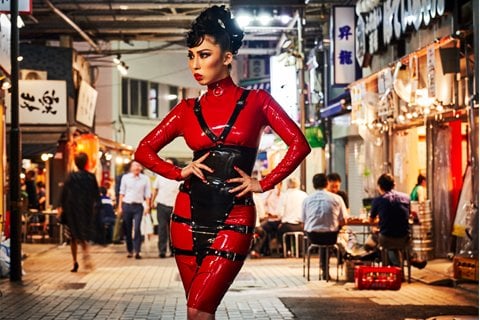
Maika Kamisusaki - Tokyo, Japan, 2018
Westward Bound latex fashion photographed at Ameyoko Market in Ueno, Tokyo, Japan, in 2018.
Model: Maika Kamisusaki
Photography: Michaël Nambu
Hair & Makeup: Chiaki Hino
Please refer to our Journal for the full story.
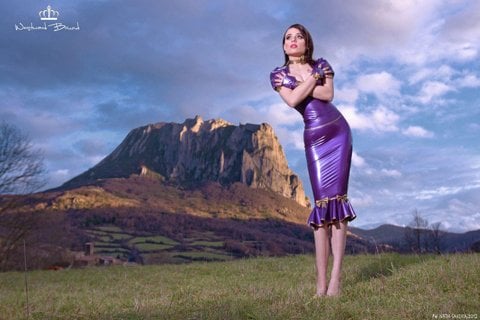
Rack Framboise - Bugarach, France, 2012
Rack Framboise was photographed in the mountains of Bugarach in southern France by international photographer Nath-Sakura.
The resulting photographs and shoot received coverage in French national press and television.
Modèle: Rack Framboise Nelly, habillée des créations de Westward Bound... Pari réussi. — avec Laika de N, L'équipe Web Nath-Sakura, Studio Coiffure Montpellier, Nathalie Nouth II, Irrésistible Tao, Eddy Martin.
Westward Bound, The Box Museum & The Cottonian Collection - Plymouth, 2022
In 2022, Westward Bound's work formed part of projects at The Box in Plymouth, creating an important connection between the company's contemporary fashion design and the city's museum collections.
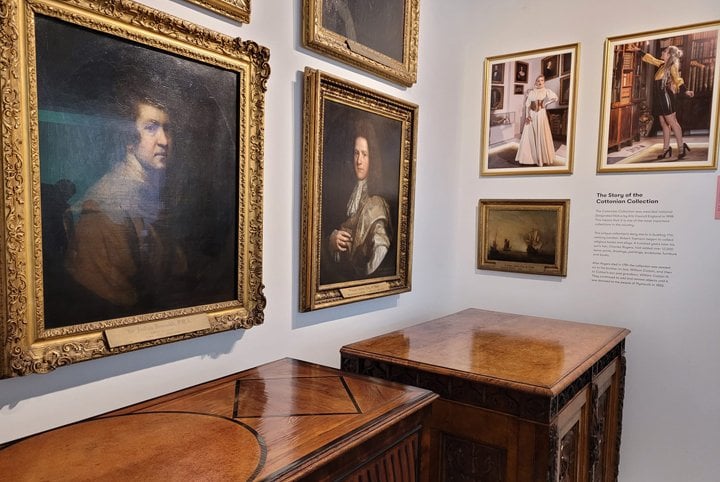
Westward Bound and the Cottonian Collection
A 1764/65 self-portrait by Sir Joshua Reynolds, founder and first president of the Royal Academy of Arts, was displayed alongside contemporary images of Westward Bound garments commissioned and photographed for The Box's Cottonian Collection.
The juxtaposition brought together historic and contemporary creative work within a collection rooted in Plymouth's wider cultural heritage.
Please see our Journal for more details.
Dress Code Fashion Exhibition & Permanent Collection
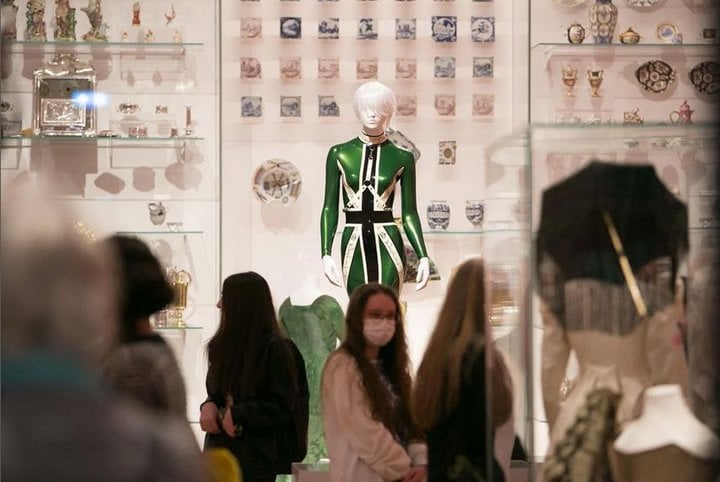
Westward Bound's Brand Me Flag Me Dress was exhibited at The Box as part of its Dress Code fashion exhibition in Plymouth in 2022.
The dress was subsequently acquired for The Box's permanent collection.
Its inclusion represents an important point in Westward Bound's history: a contemporary latex fashion design created in Plymouth becoming part of the permanent collection of the city's principal museum and cultural institution.
Please refer to our Journal for the full story.
Westward Bound Today – Independent British Latex Fashion Design & Manufacture
Westward Bound today is an independent British fashion design house and manufacturer specialising in natural rubber latex clothing for women and men.
Our garments are conceived, pattern-cut, individually handcrafted and finished by our specialist team in Plymouth, Devon. We continue to develop original designs while maintaining direct control over the creative and manufacturing process.
The company that exists today is the result of a long and unconventional evolution: from London's late-1970s and early-1980s underground culture, through Der Putsch, Cornwall, mail order, printed catalogues, retail, early e-commerce and international creative collaborations, to specialist latex fashion design and manufacture.
Successive generations have discovered Westward Bound through fashion, nightlife, photography, performance, art and design. What connects these different phases is a continuing belief in originality, skilled artistry, creative independence and the pleasure of making beautifully considered clothing.
William Morris wrote of “the desire to produce beautiful things.” That principle has always resonated with us.
We remain independent, culturally curious and creatively adventurous, while continuing to develop Westward Bound as a specialist British design and manufacturing house for customers around the world.
The photographs and archival material on this page record only part of that journey. Together, they document more than four decades of creative development and the people, places and ideas that helped shape Westward Bound.