
Featured Fashion Shoot: Annalee Belle wearing the Westward Bound Narcissine Bombe Latex Bra in Las Vegas, Nevada, USA. Photography by Radiant Inc.
How to Care for Latex Clothing: Cleaning, Storage & Polishing
Correct care helps preserve the appearance, colour, finish and condition of natural rubber latex clothing. From careful removal and hand washing to drying, storage and polishing, following a consistent care routine will help protect your garments and keep them looking their best.
Drawing on more than three decades of designing and manufacturing latex clothing, Westward Bound recommends the following care routine for natural rubber latex garments.
Customers who would like further information about the material and potential sensitivities should also refer to our Natural Rubber Latex Allergy Information.

The Golden Rules of Latex Care
- Never machine wash or tumble dry. Latex clothing should always be washed carefully by hand.
- Avoid oils, metals, excessive heat and direct sunlight. These can stain, discolour or permanently damage natural rubber latex.
- Wash after wearing. Perspiration, body oils and other residues should be removed promptly using lukewarm water.
- Store clean and completely dry. Keep latex in a cool, dark, dry environment, lightly dusted with pure, unscented talcum powder to prevent surfaces sticking together.
- Use suitable latex-care products. Specialist products should be used for cleaning, preparing, dressing and polishing natural rubber latex. Use each product according to its intended purpose and instructions.
Featured Fashion Shoot: Maika Kamisusaki modelling the Westward Bound Regina Zip-Front Pinstripe Latex Overbust Corset from the Signature Pinstripe Latex Collection in Tokyo, Japan. Photography by Michaël Nambu.



Step 1: How to Remove Latex Clothing Safely
Handle latex carefully when dressing and undressing, especially around edges, openings, and fitted areas, where excessive pulling can put unnecessary stress on the material.
- Do not pull: Never tug your garment by its edges, collar, straps or other narrow areas.
- Carefully roll it down: Gently peel the garment away from your body, progressively rolling it down and turning it inside out as you remove it.
- Remove jewellery first: Take off rings, watches, bracelets and other sharp jewellery before removing latex clothing to reduce the risk of punctures, scratches or tears.
Cotton gloves can provide additional protection when dressing or undressing by helping prevent fingernails and jewellery from coming into direct contact with the latex.
Sister Sinister modelling the Westward Bound Fiorella Latex Catsuit.

Step 2: How to Wash Latex Clothing
Latex clothing should be washed after wearing to remove perspiration, body oils, silicone and other residues that can remain on the surface.
- Hand wash only: Fill a clean basin with lukewarm water, approximately 20–30°C (68–86°F), and add a small amount of mild, unperfumed soap or a specialist latex wash.
- Wash gently: Submerge the garment and gently move it through the water by hand. Avoid aggressive rubbing, scrubbing, twisting or stretching.
- Rinse thoroughly: Rinse with fresh, clean water until all traces of soap and washing residue have been removed.
Never wash latex clothing in a washing machine. Mechanical agitation, stretching and inappropriate washing temperatures can permanently damage the garment.
Portia modelling the Westward Bound Vanguard Seven-Buckle Latex Underbust Corset.


Step 3: How to Dry Latex Clothing
After washing, latex should be dried naturally and protected from excessive heat, direct sunlight and damaging sources of ultraviolet light.
- Remove excess water gently: Lift the garment and carefully squeeze away excess water. Never wring, twist or scrub latex.
- Air dry naturally: Hang the garment on a suitable broad plastic hanger or lay it flat on a drying rack. Excess surface water can be carefully removed with a clean, soft towel.
- Dry in the shade: Keep latex away from direct sunlight and strong sources of ultraviolet (UV) light, which can contribute to deterioration, brittleness and discolouration.
- Avoid artificial heat: Never use a tumble dryer, hair dryer, radiator or other direct heat source to dry latex clothing.
- Prepare for storage: Once the garment is completely dry, lightly dust it with pure, unscented talcum powder before storing.
Make certain that both the inside and outside of the garment are completely dry before putting it away.
Imogen modelling the Westward Bound Imogen Frilled Keyhole Latex Leotard.

Step 4: How to Store Latex Clothing
The correct storage helps protect latex clothing from light, excessive heat, moisture, staining and unnecessary physical damage.
- Make sure the garment is completely dry: Never store latex while damp. Once dry, lightly dust the garment with pure, unscented talcum powder to help prevent latex surfaces from sticking together.
- Maintain a suitable temperature: Store latex clothing in a stable, cool environment between 15–25°C (59–77°F), away from excessive heat and frost.
- Protect from light: Store latex in darkness and away from direct sunlight and strong sources of ultraviolet light.
- Hang or fold carefully: Garments may be hung on suitable broad plastic hangers or loosely folded. If folded, avoid sharp creases and unnecessary pressure on the material.
- Protect during storage: A clean, dark protective garment bag or suitable wrapping can help shield latex from light and environmental exposure.
- Separate metal fittings: Place acid-free tissue paper or another suitable barrier between latex and metal fastenings, buckles, buttons or other fittings where prolonged contact could cause staining.
- Keep away from sharp objects: Fingernails, jewellery and other sharp objects can puncture, indent or tear latex.
- Avoid unsuitable chemicals: Keep stored garments away from perfumes, oils, solvents and other substances that could stain or damage natural rubber latex.
- Keep away from naked flames and excessive heat: Natural rubber latex is inflammable and should be stored accordingly.
For long-term storage, inspect your garments periodically to make sure they remain clean, dry and properly protected.
Malachy modelling the Westward Bound Rex Racer Short Latex Catsuit.



Step 5: How to Polish Latex Clothing & Restore Its Shine
Latex stored with pure, unscented talcum powder will naturally appear matt when removed from storage. Restoring its characteristic polished appearance is a two-stage process: first preparing the latex surface, then applying a suitable silicone-based shiner to produce the final high-gloss finish.
- Remove storage powder: Rinse away loose talcum powder with lukewarm water and dry the garment correctly.
- Clean and prepare the surface: Apply <u>Latex Polishing & Preparation Liquid</u> as directed. This specialist first-stage treatment helps remove residual washing smears and traces of talcum powder, leaving the latex surface clean and prepared for final polishing.
- Restore the high-gloss finish: Apply <u>Rub-Her Silicone Latex Dressing Aid & Shiner</u> as directed to the outside of the garment to produce the characteristic smooth, high-gloss finish of polished latex.
- Use Rub-Her when dressing: Rub-Her can also be used as a silicone-based dressing aid to help close-fitting latex garments glide more easily over the skin.
Important: Avoid Oil-Based Products
Never use baby oil, body oils, oil-based moisturisers, petroleum-based products or other unsuitable lubricants on natural rubber latex. These can degrade and permanently damage the material. Use dressing, cleaning and polishing products specifically intended to be compatible with latex clothing.
Following the correct routine for washing, drying, storage, surface preparation and polishing will help preserve the appearance and condition of your Westward Bound latex clothing, allowing each garment to retain the finish and character intended by its original design.
Portia modelling the Westward Bound D-Ring Divinity Short Sleeve Latex Dress.

Essential Latex Care Products
Westward Bound recommends specialist care products formulated for use with natural rubber latex clothing. The two products below perform different but complementary functions: Latex Polishing & Preparation Liquid prepares and cleans the latex surface, while Rub-Her provides dressing lubrication and the final high-gloss finish.
Use each product according to its individual instructions. Avoid substituting household cleaners, cosmetic products, oils or other preparations that have not been formulated for use with natural rubber latex.
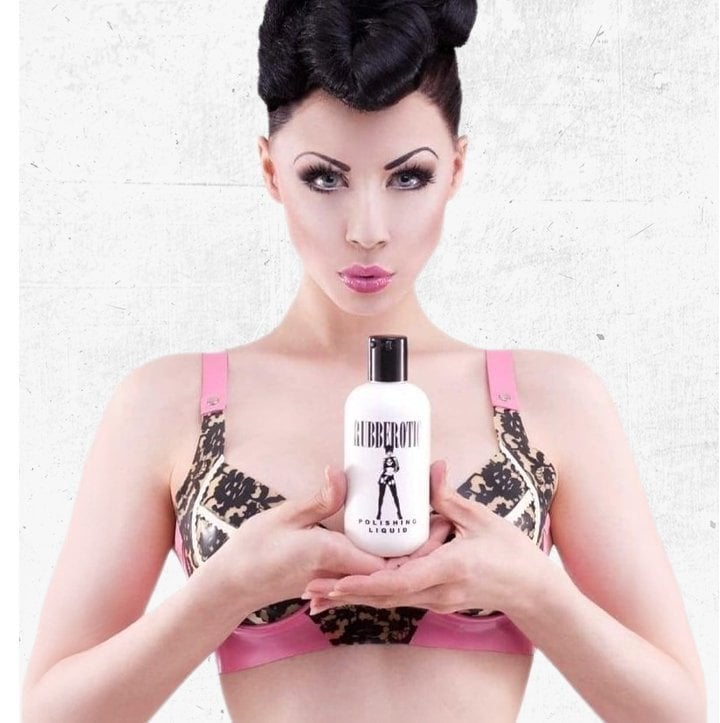
Latex Polishing & Preparation Liquid
A specialist first-stage treatment for natural rubber latex clothing, formulated to prepare the garment before its final polish. This silicone-based blended solution combines a mild detergent, disinfectant and emulsifying agent to help remove residual washing smears and traces of talcum powder while helping to preserve the latex.
Use after washing or storage to leave the latex surface clean and prepared for final polishing with Rub-Her Silicone Latex Dressing Aid & Shiner.

Rub-Her Silicone Latex Dressing Aid & Shiner
A specialist silicone-based dressing aid and finishing treatment for natural rubber latex clothing. Apply as directed to help close-fitting garments glide more easily over the skin when dressing and to produce the characteristic smooth, high-gloss finish of polished latex.
Use after Latex Polishing & Preparation Liquid when restoring the final shine to garments following washing or storage.

Troubleshooting: Common Questions
My latex looks dull and has white patches. Is it ruined?
Not at all. This is likely just the talcum powder from storage or natural oxidation. A quick wash and dry, as per the instructions provided, followed by an application of Latex Polishing & Preparation Liquid will restore the shine.
Can I use household oil (like baby oil) to shine my dress?
Absolutely not. Mineral oils, baby oils, and petroleum jelly will chemically react with the latex, causing it to swell, lose shape, and eventually disintegrate. Only use silicone-based products.
Can I iron my latex if it is wrinkled?
No. An iron will melt the rubber immediately. If your garment is wrinkled from storage, simply hang it in a warm room (away from direct heat sources) or wear it to let your body heat naturally smooth out the creases.
What happens if I get a small tear?
Latex is sensitive to punctures. If you snag your garment, do not continue to wear it, as the tear will expand. Latex can be repaired using a patch and solvent-based glue, but this requires a steady hand.
Why do you recommend plastic hangers?
Latex is susceptible to staining from metals. A metal hanger can leave permanent discolouration on the shoulders of your garment. Always use wide plastic hangers to support the weight of the rubber without stretching the shoulders.